
Forged carbon fiber is often discussed as one material, but product teams usually need to choose a specific material form first. The right choice depends on whether the final product needs flat surfaces, machined details, handles, tubes, rods, bars, or small luxury components.
For colored forged carbon fiber, this decision matters even more because the final visual effect depends on material thickness, cutting direction, machining method, and the way the component is finished.
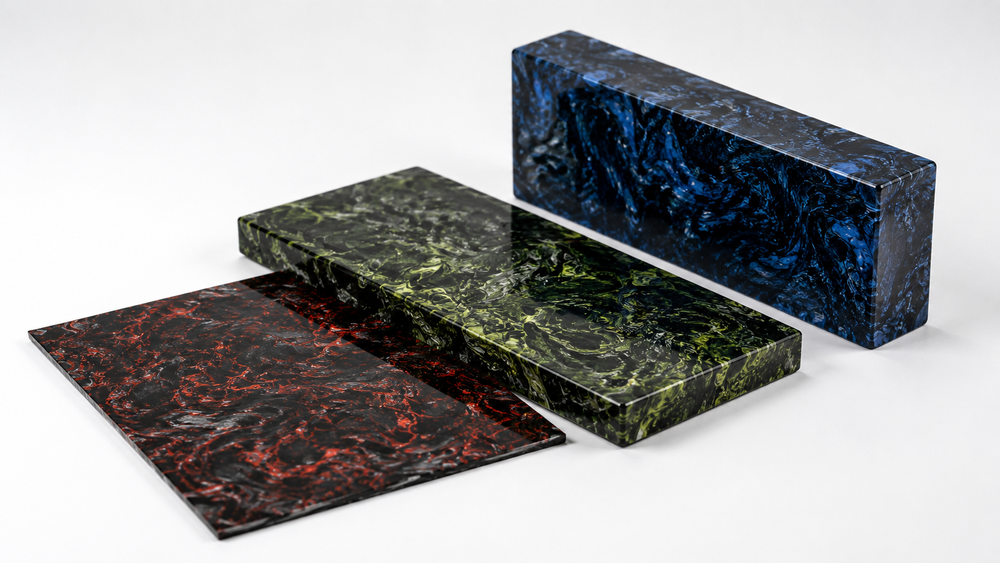
Forged carbon fiber sheets
Forged carbon fiber sheets are usually the most practical starting point when a product team needs flat or CNC-machined parts. Sheets can be used for overlays, panels, knife scales, jewelry components, watch details, decorative plates, product inserts, and small luxury hardware.
They are useful when the design needs a visible forged carbon pattern across a surface. For colored forged carbon fiber, sheets also make it easier to compare color directions before moving into more complex components.
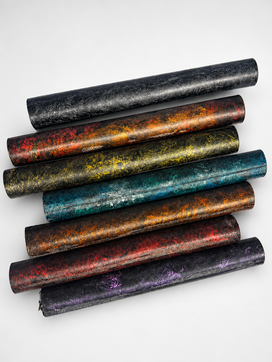
Forged carbon fiber tubes
Tubes are more suitable when the final product needs a cylindrical form or a structural handle-like component. Possible applications include premium handles, accessories, sporting goods parts, grip components, design hardware, and custom product details.
Because the pattern wraps around the part, tube development usually requires more attention to wall thickness, diameter, surface finishing, and how the color effect appears after machining.
Forged carbon fiber rods and bars
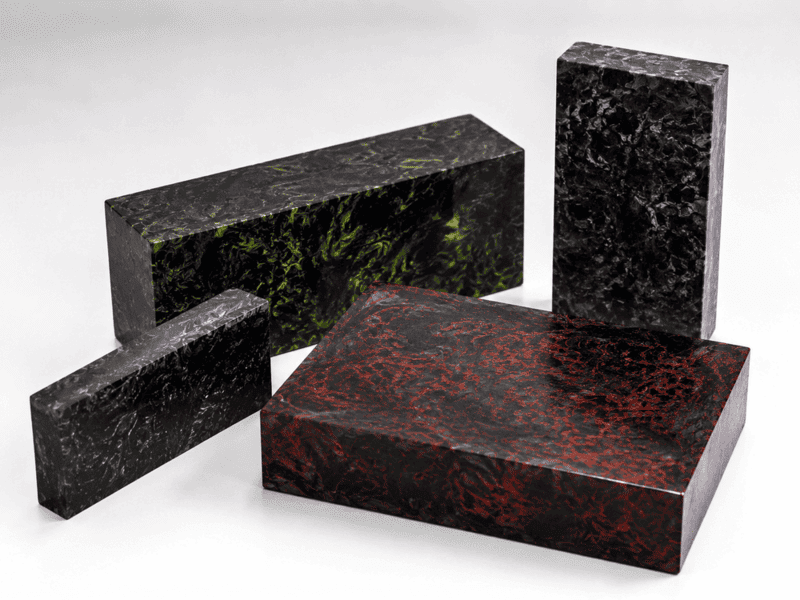
Rods and bars are useful for components that will be cut, turned, milled, or shaped into custom parts. They are often a better direction when the final design is not a simple flat panel or tube.
For example, a brand developing knife handles, watch case details, jewelry parts, tool handles, or small luxury components may prefer rods or bars because they allow more freedom in machining.
Colored forged carbon fiber for luxury components
Colored forged carbon fiber is especially useful when the material itself needs to carry part of the product identity. Compared with standard black carbon fiber, colored forged carbon fiber gives designers more room to build a product family around a specific color direction.
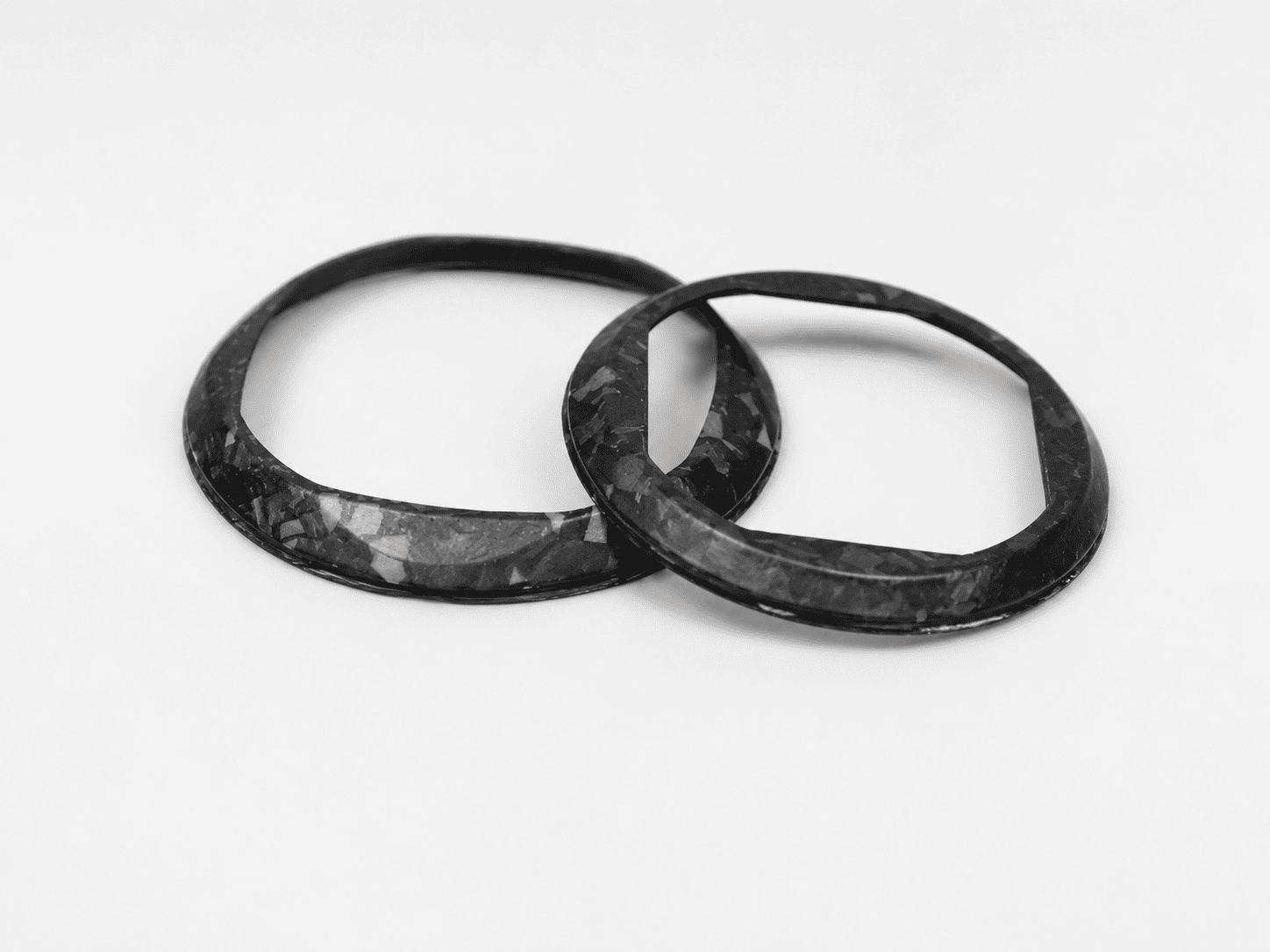
- Watch components: cases, bezels, dials, decorative inserts, and small hardware details.
- Knife handles: scales, handle blocks, and custom color material blanks.
- Jewelry components: rings, pendants, bracelet details, and luxury accessories.
- Consumer products: panels, inlays, handles, and custom machined details.
How to choose the right material form
A practical way to start is to define the product shape first, then choose the material form.
- Choose sheets for panels, overlays, flat CNC parts, and visual sample evaluation.
- Choose tubes for cylindrical parts, handles, rods with inner diameter requirements, and wrapped visual effects.
- Choose bars or blocks for custom machined components, knife handles, jewelry parts, and small luxury goods.
Carbonaurum develops colored forged carbon fiber materials for sheets, tubes, rods, bars, watch cases, knife handles, jewelry components, and custom CNC parts. If your team is still comparing material forms, the best first step is to review color options and discuss the final product structure before sampling.
Review the colored forged carbon fiber material color lookbook, or visit our forged carbon fiber sheets page to explore material directions.
Contact Carbonaurum to discuss material samples, dimensions, colors, and OEM/ODM component development.