
Machinable Carbon Fiber: Sheets, Blocks, Rods and Tubes for CNC Projects
A complete guide to machinable carbon fiber stock for CNC routing, milling, turning, drilling, polishing, and custom component production — including forged carbon fiber sheets, carbon fiber tubes and blocks, carbon fiber rods and bars, and custom forged carbon fiber components.
Carbon fiber has become one of the most sought-after materials in precision CNC machining — valued for low density, high specific stiffness, and distinctive visual character. But not all carbon fiber stock is suitable for CNC work. The form factor, internal structure, resin system, and surface treatment all determine whether a carbon fiber material will machine cleanly, finish well, and meet the visual standard required for the finished component.
This guide explains what machinable carbon fiber is, how different carbon fiber stock forms behave under tooling, what colored forged carbon fiber adds to CNC workflows, and how to choose the right stock for your project.
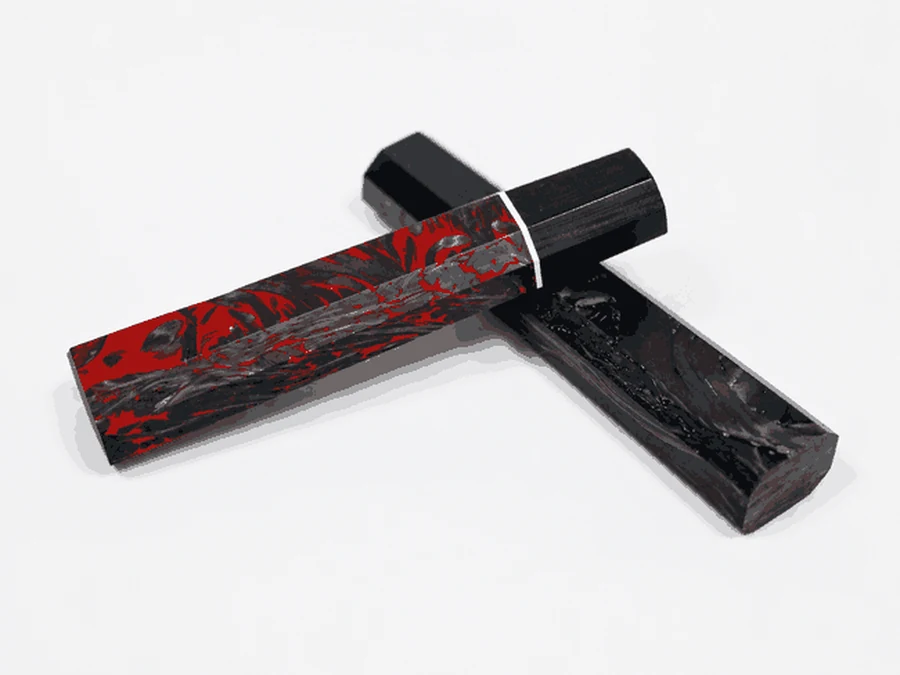
Quick answer: for flat CNC-cut parts, choose carbon fiber sheets. For three-dimensional CNC milling, choose carbon fiber blocks. For lathe turning, choose carbon fiber rods. For cylindrical parts requiring a pre-formed bore, choose carbon fiber tubes.
What Makes Carbon Fiber Machinable?
Not all carbon fiber composite is suited to machining. Thin laminated carbon fiber sheet — the type used for structural panels in aerospace and motorsport — can delaminate at cut edges, splinter under aggressive tool paths, and produce poor surface quality when end-milled at cross-grain angles.
Machinable carbon fiber stock is produced for material removal workflows. The key characteristics are structural density, cross-section consistency, and predictable behavior under carbide tooling. Carbonaurum's forged carbon fiber technology helps achieve these properties through a three-dimensional chopped-strand structure rather than a conventional woven laminate.
Forged carbon fiber has no dominant grain direction and no discrete laminate layers to delaminate. The structure is uniform through the full cross-section — whether you are routing a sheet, milling a block, turning a rod, or drilling through a tube wall.
Carbon Fiber CNC Machining: Form Factor Selection
Selecting the right carbon fiber stock form is both a material-efficiency decision and a workflow decision. Each form factor — sheet, block, rod, tube, and bar — suits a different component geometry. Choosing correctly reduces material waste, machining time, fixturing complexity, and tooling wear.
Carbon Fiber Sheets for CNC Routing and Milling
Carbon fiber sheets are flat panel stock supplied in consistent thickness across a defined area. For CNC applications, forged carbon fiber sheets are the correct choice when the finished component is thin and flat, and the primary operations are profile cutting, face routing, pocket milling, edge profiling, and precision drilling.
Components cut from Carbonaurum sheets — decorative panel inlays, flat hardware, watch dial faces, keyboard plates, and product inserts — expose color at every CNC-cut edge, not raw black carbon beneath a surface color layer.
CNC operations suited to carbon fiber sheet stock include profile routing, pocket milling, precision drilling, engraving-style surface detailing, and edge profiling. Carbide spiral downcut or compression end mills are commonly used to improve edge quality on composite sheet stock.
Carbon Fiber Blocks for CNC Milling
A carbon fiber block is a solid rectangular billet. It is the right starting point when the finished component is three-dimensional, non-cylindrical, or requires significant material removal from multiple axes.
Carbon fiber blocks give CNC operators maximum freedom: the material can be approached from any face, pockets and contours can be machined in any orientation, and substantial material can be removed without being constrained by pre-formed geometry.
Blocks are suitable for watch dials and case components, complex hardware bodies, decorative architectural elements, knife handle scales, premium consumer product parts, and CNC components where three-dimensional form is the machining challenge.
Carbon Fiber Rods for CNC Turning
Carbon fiber rods are solid cylinders. They are the correct starting stock when a CNC lathe or manual lathe is the primary machine, and the finished component is cylindrical or near-cylindrical.
Carbon fiber rods eliminate roughing operations required to bring a square block into a round profile. Their solid cross-section means there is no bore to account for and no wall thickness constraint.
CNC turning applications include precision knobs, actuator bodies, valve stems, decorative cylindrical components, pen barrel sections, custom hardware, and rotational parts where the final geometry is derived by turning from round stock.
Carbon Fiber Tubes for CNC Projects Requiring a Pre-Formed Bore
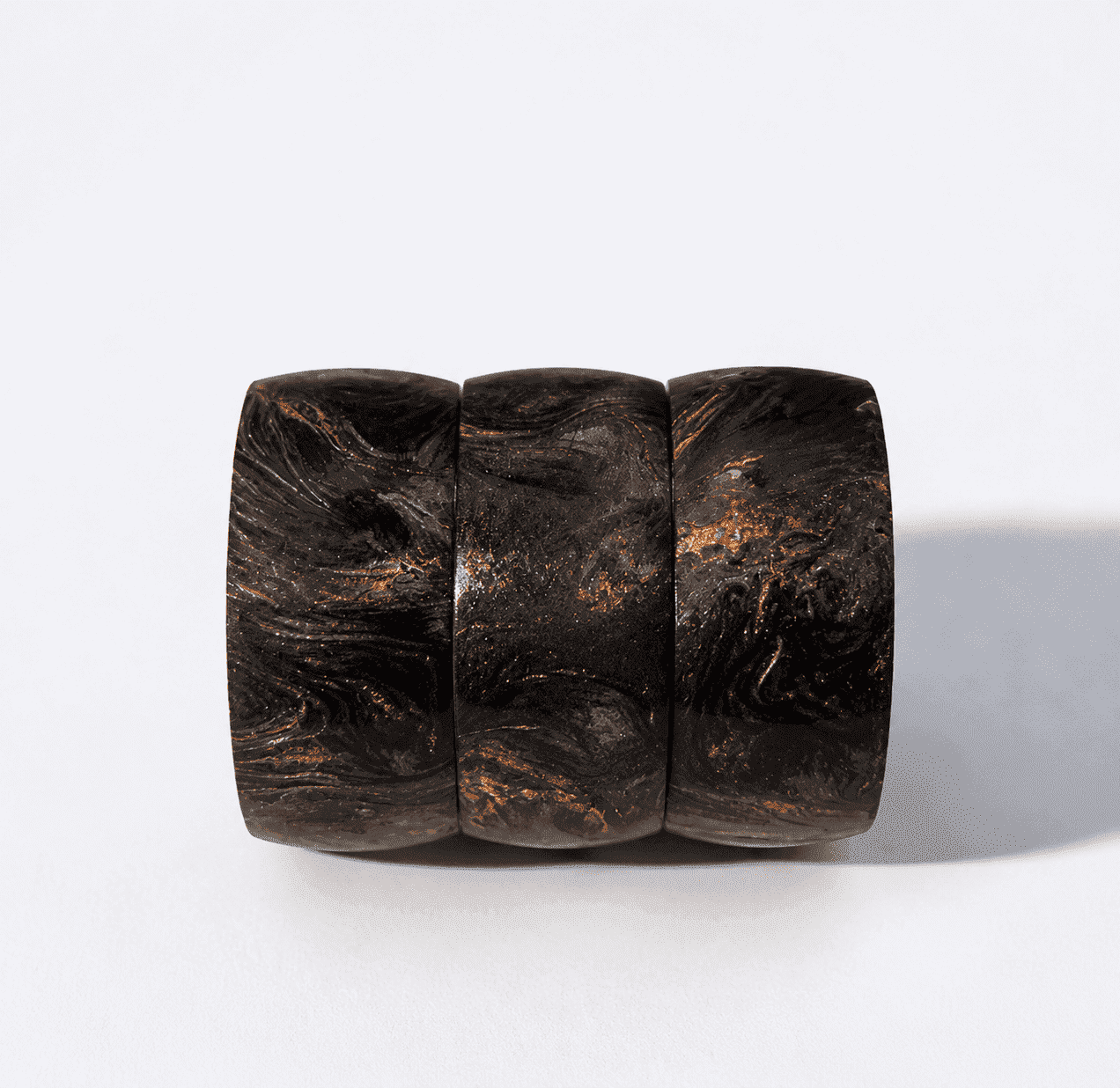
Carbon fiber tubes are hollow cylinders with an interior bore running through the full length. For CNC work requiring a cylindrical hollow component, starting from carbon fiber tube stock avoids the need for deep-hole drilling in a solid rod.
CNC turning applications include precision knobs, actuator bodies, valve stems, decorative cylindrical components, pen barrel sections, custom hardware, and rotational parts where the final geometry is derived by turning from round stock.
Carbon Fiber Bars for Flat CNC Components
Carbon fiber bars occupy the space between sheet and block: solid flat rectangular stock that is thicker than sheet but narrower than a full billet block. Bars are efficient for flat components with significant thickness, including knife scales, bracelet links, inlay stock, flat hardware panels, and mechanical keyboard components.
For CNC milling, carbon fiber bars provide a ready-to-clamp flat section with consistent dimensions on all faces — a practical advantage when the target component geometry is already approximately flat.
Carbon Fiber CNC Machining: Process and Tooling
Tooling Selection for Carbon Fiber CNC Machining
The correct tooling choice for carbon fiber CNC machining is solid carbide or carbide-tipped tooling across milling, turning, drilling, and routing. High-speed steel tooling wears quickly against carbon fiber's abrasive reinforcement and is not recommended for production CNC workflows.
For milling and routing carbon fiber sheets and blocks, solid carbide end mills designed for composite materials are recommended. Downcut spiral geometry can reduce surface splintering on exit faces, while compression geometry can help manage both entry and exit surface quality.
For turning carbon fiber rods and tubes, carbide-tipped inserts with positive rake geometry can reduce cutting forces and heat generation. Adequate chip clearance, dust control, and process testing are important before production machining.
Feed Rates and Speeds for Carbon Fiber Milling
Carbon fiber CNC machining generally benefits from high spindle speeds and carefully controlled feed rates. Tool diameter, machine rigidity, fixturing, depth of cut, and composite structure all influence the correct cutting parameters.
Too light a chip load can cause rubbing, heat buildup, and accelerated tool wear. Too heavy a chip load can risk fiber breakout at machined edges. For Carbonaurum forged carbon fiber, contact our team for machining sample evaluation and project-specific parameter discussion.
Dust Control and Safety in Carbon Fiber CNC Machining
Carbon fiber machining generates fine abrasive particulate. Dust extraction connected near the cutting zone, respiratory protection, eye protection, and workspace ventilation are important for machining, cutting, drilling, sanding, and polishing carbon fiber materials.
MSDS documentation is available for Carbonaurum products and should be reviewed before machining. Buyers can also review OSHA Safety Data Sheets guidance for general safety documentation concepts.
Colored Carbon Fiber for CNC Projects: The Carbonaurum Difference
Standard machinable carbon fiber stock is black. For purely structural components, color may not matter. But for product designers, jewelers, pen turners, watchmakers, and makers producing visible components, black can be a limitation.
Carbonaurum solves this with colored forged carbon fiber produced with color integrated through the material cross-section during the forging process. Color is not applied as a surface coating after forming. It is not a thin resin tint layer. It runs through the full depth of sheets, the full billet of blocks, and the full cross-section of rods, tubes, and bars.
For CNC projects, the benefit is direct: every surface your tooling creates carries color. Milled pockets, turned profiles, drilled holes, polished end faces, routed edges, and machined contours can all show consistent color depth and forged carbon pattern.
Six Color Collections for Machinable Carbon Fiber
Carbonaurum supplies machinable carbon fiber stock in six color collections across sheets, blocks, rods, tubes, and bars:
- Vivid Color: bold saturated color for strong product identity.
- Metallic Luster: gold, copper, silver, and rose-gold tone effects for premium parts.
- Glow: photoluminescent stock that emits visible glow in darkness.
- Van Gogh: swirling multi-color patterns with strong visual character.
- Aurora: iridescent color-shift effects that respond to viewing angle.
- Opal: translucent gemstone-like depth for jewelry and luxury product applications.
View the full Carbonaurum Color Collections page to compare the collections before requesting samples.
Custom Forged Carbon Fiber Parts: From Stock to Finished Component
For buyers who want CNC carbon fiber components without machining the raw stock themselves, Carbonaurum offers custom forged carbon fiber parts — finished or near-finished components machined to your geometry and color specification.
Custom component production is suitable for buyers with a defined component geometry, drawing, 3D file, photo reference, or detailed description. Carbonaurum can review the target color collection, tolerance requirements, surface finish, production volume, and feasibility.
This pathway is used by brands producing carbon fiber watch components, jewelry hardware, pen parts, consumer product housings, mechanical keyboard components, and precision decorative hardware.
Who Uses Machinable Carbon Fiber From Carbonaurum?
The range of CNC machinists and manufacturers working with Carbonaurum machinable carbon fiber reflects the breadth of applications where carbon fiber performance and through-body color create real product differentiation.
Jewelry manufacturers and ring makers turn carbon fiber tube blanks into rings where color runs through the full band. Pen makers use rod and tube stock for barrel components. Watchmakers machine block and bar stock into dial faces, bracelet links, and case hardware. Knife makers use carbon fiber bar stock for handle scales where color appears at profiled and beveled edges. Industrial designers use machinable carbon fiber blocks and rods for prototypes and custom hardware.
The common requirement is machinable carbon fiber stock that performs consistently under tooling and delivers a specific visual outcome at machined surfaces — not black carbon fiber with a surface treatment that disappears when cutting begins.
Specifications at a Glance
All Carbonaurum machinable carbon fiber stock — sheets, blocks, rods, tubes, and bars — shares the following baseline material profile.
| Material | Forged carbon fiber composite with integrated pigment |
|---|---|
| Color Behavior | Through-body color visible at machined surfaces, cut edges, drilled holes, and polished faces |
| Available Forms | Sheets, blocks, rods, tubes, bars, and custom machined components |
| Color Collections | Vivid Color, Metallic Luster, Glow, Van Gogh, Aurora, Opal |
| Tooling Compatibility | Standard carbide tooling for turning, milling, drilling, routing, and cutting |
| Surface Finish | Can be sanded and polished to a high-gloss finish without surface color coating |
| Certification | RoHS certified. See the European Commission RoHS Directive for general RoHS background. |
| Documentation | MSDS available on request |
| MOQ | Low minimum order quantity. Contact Carbonaurum for current details by product form. |
| Custom Sizes | Available for all form factors. Feasibility depends on geometry, color collection, and production requirements. |
| Shipping | International shipping available |
Frequently Asked Questions: Carbon Fiber CNC Machining
What is the best carbon fiber form for CNC milling?
For three-dimensional components and deep pockets, a carbon fiber block is the most versatile starting stock for CNC milling. For flat components and profile routing, carbon fiber sheet is the most material-efficient choice.
Can forged carbon fiber be machined on a standard CNC router?
Yes. Forged carbon fiber can be machined on standard CNC routers and mills with carbide tooling. Adequate dust extraction is required. Spindle speeds, feed rates, and tool geometry should be suitable for carbon fiber composite.
Does colored carbon fiber machine differently from standard black carbon fiber?
No. Carbonaurum colored forged carbon fiber machines like standard black forged carbon fiber. The difference is the color behavior: machined surfaces expose through-body color rather than raw black fiber beneath a surface layer.
What is the minimum order quantity for machinable carbon fiber stock?
Carbonaurum offers low minimum order quantities across machinable carbon fiber forms. Contact us with your material form, collection, dimensions, and target volume for current MOQ confirmation.
Can Carbonaurum supply finished CNC carbon fiber parts rather than raw stock?
Yes. Custom forged carbon fiber component production is available for buyers who prefer to specify finished or near-finished geometry rather than machine raw stock themselves.
Are Carbonaurum machinable carbon fiber products RoHS certified?
Yes. Carbonaurum machinable carbon fiber products across sheets, blocks, rods, tubes, bars, and color collections are RoHS certified. MSDS documentation is available on request.
Evaluate Machinable Carbon Fiber in Your Own Workflow
The behavior of a machinable material under tooling is best confirmed by machining it yourself. Specifications are useful, but only a sample test can show how the material responds to your exact tool path, feed rate, polishing sequence, and finish standard.
Carbonaurum physical samples are available across all six color collections and all machinable form factors — sheets, blocks, rods, tubes, and bars. Request samples in your target form factor, machine a cross-section, polish a surface, and confirm the material before committing to production.
Where Machinable Carbon Fiber Creates Value
Carbonaurum machinable carbon fiber is suitable for visible, premium, CNC-machined components where material appearance is part of the final product value.
Jewelry & Rings
Tube blanks, rods, bars, and sheets for rings, inlays, pendants, cufflinks, and hybrid jewelry components. See jewelry applications.
Consumer Electronics
Thin panels, housings, covers, buttons, and premium visual parts for device accessories. See consumer electronics applications.
Automotive
Decorative trim, badges, inserts, license plate frames, and custom styling parts. See automotive applications.
Luxury Goods
Premium decorative components for accessories, hardware, presentation products, and brand-defining parts. See luxury goods applications.
Sporting Goods
Lightweight colored carbon fiber stock for handles, inserts, grips, decorative hardware, and performance accessories. See sporting goods applications.
Custom Components
Finished or near-finished CNC carbon fiber parts made to your geometry, color, and surface finish requirements. See custom components.
Explore More Machinable Carbon Fiber Materials
Compare material forms, color systems, custom manufacturing options, and application pages before requesting samples.
External References for Buyers and CNC Machinists
For broader reference, buyers may review OSHA Safety Data Sheets guidance, the European Commission RoHS Directive, CompositesWorld composite materials resources, and Google Search Central helpful content guidance.
Request Machinable Carbon Fiber Samples
Test Carbonaurum material in your own CNC workflow. Request physical samples in your target color collection and material form — sheet, block, rod, tube, bar, or custom component.