Colored Carbon Fiber vs Colored Forged Carbon Fiber: What Buyers Should Know
Learn the real difference between surface-colored carbon fiber and through-body colored forged carbon fiber — and why that difference matters for CNC machining, ring making, watch components, pen turning, knife scales, and premium product manufacturing.
Colored carbon fiber is everywhere in the market: blue carbon fiber phone cases, red carbon fiber trim panels, gold carbon fiber watch accessories, and green carbon fiber jewelry details. The visual language of carbon fiber, combined with color, has become an important material category across jewelry, consumer electronics, automotive accessories, and precision hardware.
But not all colored carbon fiber is the same material. The difference between surface-colored carbon fiber and colored forged carbon fiber is not a marketing distinction. It is a structural one — and it determines whether a colored carbon fiber component will keep its color after machining, turning, drilling, polishing, and fabrication.
Quick answer: surface-colored carbon fiber looks colored only at the outer layer. Colored forged carbon fiber carries color through the material cross-section, so cut edges, drilled holes, turned profiles, and polished faces can retain the intended color.
| Comparison Point | Surface-Colored Carbon Fiber | Colored Forged Carbon Fiber |
|---|---|---|
| Color Location | Color sits on or near the exterior surface. | Color is integrated throughout the material cross-section. |
| Machined Edges | Cutting may expose black carbon below the color layer. | Cutting exposes more of the same color and forged pattern. |
| Lathe Turning | Turning can remove the colored surface completely. | Turned profiles retain through-body color. |
| Best Use | Decorative overlays that are not machined after coloring. | Rings, pen blanks, watch parts, knife scales, CNC parts, and visible machined components. |
| Buyer Risk | Color failure may appear after fabrication. | Sample machining confirms color consistency before production. |
What Is Colored Carbon Fiber?
The term “colored carbon fiber” covers several fundamentally different materials that may look similar on the surface but behave very differently when they are cut, milled, turned, drilled, or polished.
Surface-Coated Carbon Fiber
The most common form of colored carbon fiber in the consumer market is standard carbon fiber with a colored coating applied to the exterior surface. The coating may be paint, lacquer, colored film, or a specialty resin layer over the carbon fiber surface.
Surface-coated carbon fiber can look attractive on an uncut piece. For decorative applications where the material is never cut, drilled, or machined, surface coating may be adequate.
The limitation appears when the material is worked. Machining removes the coating. Drilling exposes raw black carbon at the hole edge. Cutting produces an edge where the colored layer sits above a darker cross-section. Polishing through the coating creates a visible color boundary.
Resin-Tinted Carbon Fiber
Some colored carbon fiber products achieve color by tinting the resin system used in lamination. This produces a color effect that may penetrate deeper than a coating because pigment is distributed in the resin layer.
Resin-tinted carbon fiber performs better than surface coating under light work, but the fiber itself remains black. When material removal becomes deeper — for example during carbon fiber CNC machining, drilling, turning, or pocket milling — the color may thin or reveal darker carbon fiber beneath.
Colored Forged Carbon Fiber
Colored forged carbon fiber is structurally different. The color is not applied to the surface and is not limited to the outer resin layer. It is distributed through the full material cross-section during the forging process before the material takes its final form.
In forged carbon fiber production, chopped carbon fiber strands are combined with a resin system and compressed under heat and pressure into forms such as sheets, blocks and tubes, rods and bars. Introducing pigment into this process distributes color throughout the material volume.
When you machine colored forged carbon fiber, you are not removing color — you are revealing more of it. This is the defining property that makes it suitable for machined components, jewelry, watchmaking, pen turning, and precision hardware.
Why the Difference Matters: Real Applications
The structural difference between surface color and through-body color has direct consequences for manufacturing. Here is how it affects the most common colored carbon fiber applications.
Ring Making and Jewelry
Carbon fiber rings are turned and bored from blank stock. The outer diameter is machined to the final profile, and the inner diameter is bored to the finger size. Both surfaces are part of the finished ring.
With surface-colored carbon fiber, turning and boring can expose black carbon beneath the color layer. With colored forged carbon fiber, the inner bore, outer profile, and polished side faces all carry consistent through-body color.
For jewelry applications, Carbonaurum can supply colored carbon fiber tube blanks, carbon fiber inlay rods and bars, and custom blanks depending on ring structure.
Pen Turning
Pen barrel blanks are turned on a lathe from the blank outer diameter down to the finished barrel profile. In many cases, the original exterior surface is mostly or completely removed.
A surface-colored blank may lose the intended color after turning. A colored forged carbon fiber blank retains the color because the material is colored through the cross-section.
Watch Dials and Case Components
Watch dial and case component production may involve milling, drilling, surface finishing, and polishing. The finished surfaces are often created entirely by machining.
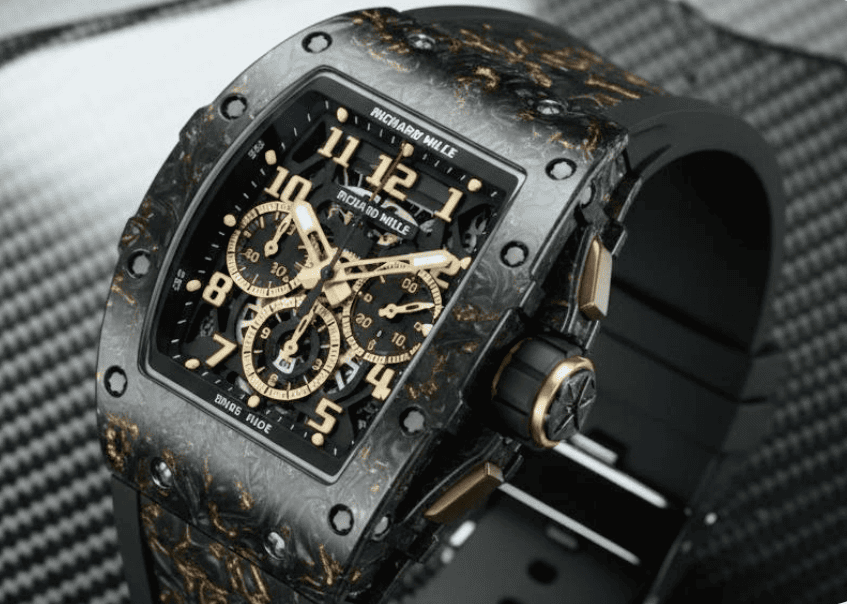
Surface color on carbon fiber watch blanks may not survive the machining process. Through-body color does, which makes colored forged carbon fiber a stronger material choice for watch component suppliers and high-end custom makers.
Knife Scales and Handle Panels
Carbon fiber knife scales are profiled, contoured, drilled, beveled, and finish-sanded. The profiled edges and shaped surfaces are visible in the finished knife.
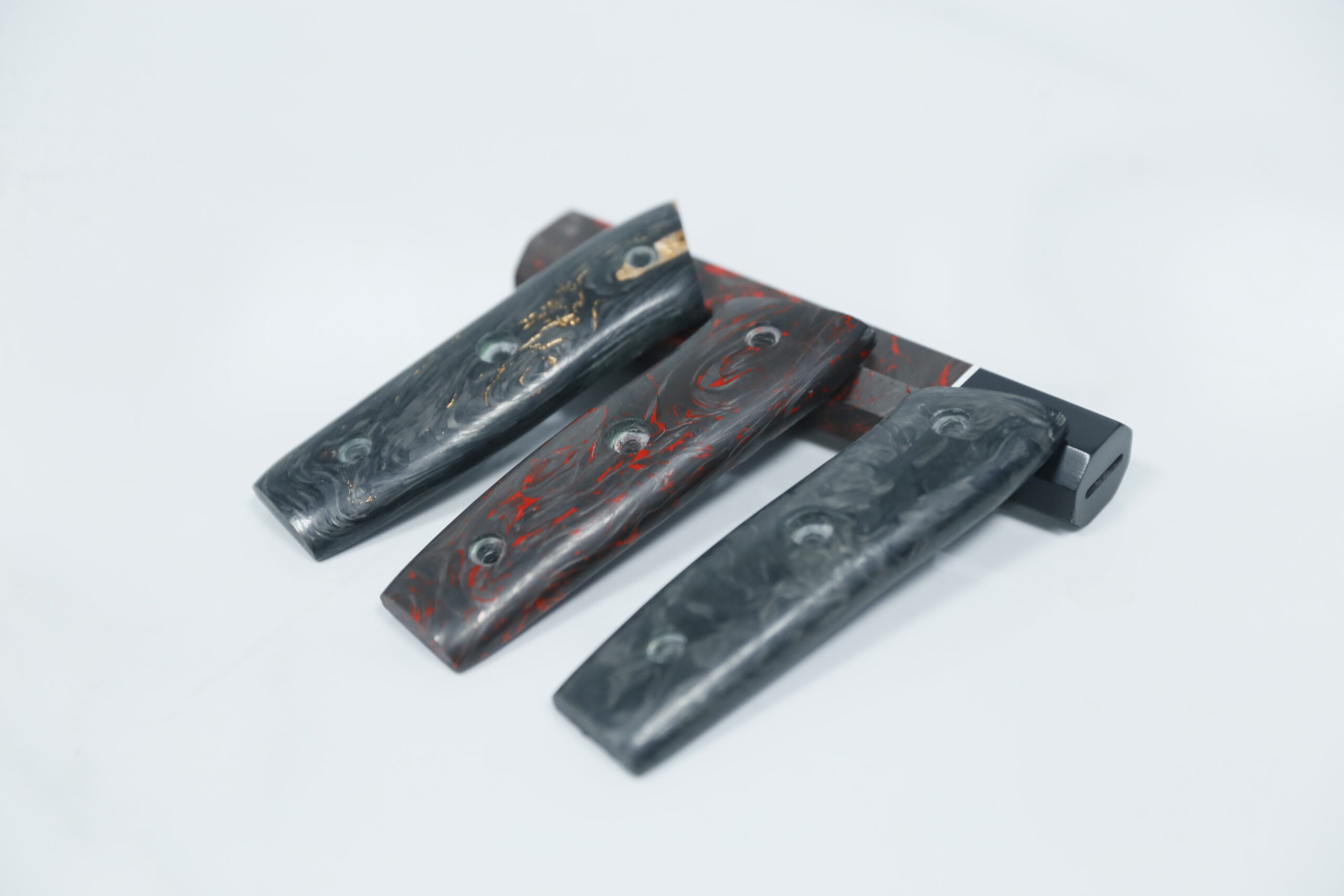
Surface-colored carbon fiber can show black carbon at profiled edges and contoured surfaces. Colored forged carbon fiber shows consistent color at machined edges, bevels, and polished profiles.
Blue Forged Carbon Fiber: Applications and Availability
Blue is one of the most requested colors in carbon fiber across jewelry, consumer electronics, automotive accessories, and precision hardware. It is also one of the colors where the surface-coating problem becomes visually obvious: a vivid blue surface against exposed black carbon at machined edges is hard to conceal.
Carbonaurum blue forged carbon fiber carries through-body blue pigmentation across the full material cross-section. Machined surfaces — turned profiles, drilled holes, cut edges, and polished faces — can expose the same blue at the same depth as the original surface.
Blue forged carbon fiber is available in sheet, block, rod, tube, and bar form factors as part of the Vivid Color collection. Applications include blue carbon fiber ring blanks, pen barrel stock, inlay rods, and blocks for watch dial or case component machining.
Red Forged Carbon Fiber: Applications and Availability
Red forged carbon fiber is a strong choice for applications where bold material character is part of the design specification: EDC accessories, knife scales, watch components, premium pens, jewelry, and visible hardware.
Red is also commonly misrepresented in the surface-colored carbon fiber market. Thin red coating over black carbon fiber reads as red on flat surfaces but may fail at machined edges after fabrication.
Carbonaurum red forged carbon fiber carries through-body red pigmentation throughout the full material cross-section and is available across standard form factors in the Vivid Color collection.
Gold Forged Carbon Fiber: Applications and Availability
Gold is one of the most requested metallic tones for carbon fiber in jewelry, luxury accessories, watchmaking, and premium hardware. The combination of carbon fiber’s random-flow pattern with a warm gold aesthetic creates a material character that feels both technical and luxurious.
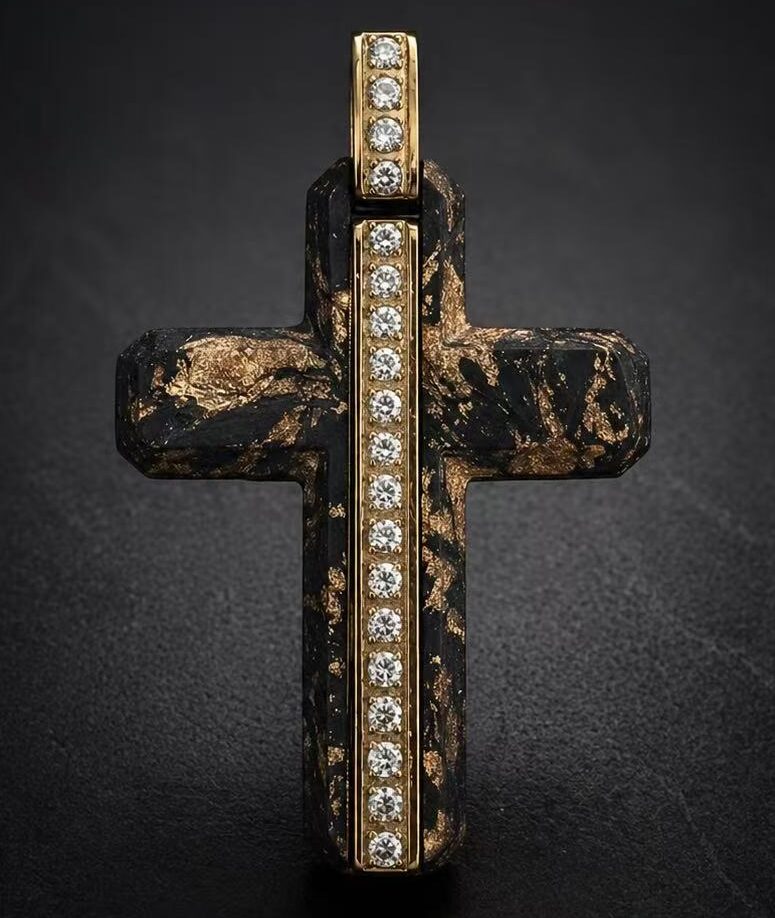
Carbonaurum gold forged carbon fiber is produced under the Metallic Luster collection, which is developed to deliver gold, copper, silver, and rose-gold tone effects through the same through-body forging process.
Gold forged carbon fiber is especially suitable for ring making, watch component CNC machining, luxury pen production, jewelry hardware, and premium consumer product details where machined surfaces remain visible.
Green Forged Carbon Fiber: Applications and Availability
Green forged carbon fiber is less common than blue, red, and black, which makes it a strong differentiation choice when visual distinction is part of the purchasing driver.
Applications include jewelry, pen barrel blanks, knife scales, watch components, EDC hardware, and premium accessories. Green can be supplied as a solid Vivid Color option or as part of multi-color Van Gogh patterns.
How to Evaluate Colored Carbon Fiber Before You Buy
The practical test for any colored carbon fiber material is straightforward: machine a cross-section, polish the face, and look at what you see.
If the cross-section shows a thin colored layer at the surface with a different color or raw carbon below it, you have surface-colored material. The color depth you can see is the color depth you have. Any machining that removes more than that depth may expose the underlying material.
If the cross-section shows consistent color with no visible color boundary and no transition to a different underlying material, you have through-body colored material. The color visible at the cut face is the color you should expect at machined surfaces.
Carbonaurum provides physical samples across all six color collections and all form factors so buyers can perform this test under their own process conditions before committing to production.
Carbonaurum Colored Forged Carbon Fiber: Six Collections
Carbonaurum produces colored forged carbon fiber across six collections, all available in sheets, blocks, rods, tubes, and bars with through-body color behavior.
- Vivid Color: saturated solid colors including blue, red, green, and additional hues.
- Metallic Luster: gold, copper, silver, and rose-gold tone metallic effects.
- Glow: photoluminescent carbon fiber that emits visible glow in darkness.
- Van Gogh: multi-color swirling patterns with individual piece-to-piece character.
- Aurora: iridescent color-shift material with viewing-angle variation.
- Opal: translucent carbon fiber with gemstone-like light interaction and visible interior depth.
View the full Carbonaurum Color Collections page to compare available color directions. All collections are RoHS certified, and MSDS documentation is available on request.
Frequently Asked Questions
What is the difference between colored carbon fiber and colored forged carbon fiber?
Colored carbon fiber is a broad category that includes surface coating, colored film, and resin tinting. Colored forged carbon fiber has color distributed throughout the full material cross-section during the forging process, so machined surfaces can retain the intended color.
Does colored forged carbon fiber lose color when machined or polished?
No. Because color is distributed throughout the full cross-section, machining exposes more of the same color rather than a different material beneath a shallow color layer.
Is blue forged carbon fiber available for ring making?
Yes. Blue forged carbon fiber is available in tube form for ring blank production and in rod form for inlay applications. Blue is part of the Vivid Color collection.
What is gold forged carbon fiber made from?
Carbonaurum gold forged carbon fiber is produced by integrating metallic-luster gold pigment throughout the carbon fiber material during the forging process. It is not a gold coating over black carbon fiber.
Can I get red forged carbon fiber for knife scales?
Yes. Red forged carbon fiber bar stock can be used for knife scale production. Through-body red pigmentation helps profiled edges, beveled contours, and machined surfaces retain consistent color.
Is green forged carbon fiber available?
Yes. Green forged carbon fiber is available within the Vivid Color collection as a solid color option and within the Van Gogh collection as part of multi-color swirling patterns.
Are colored forged carbon fiber products RoHS certified?
Yes. Carbonaurum colored forged carbon fiber products across all six collections and all form factors are RoHS certified. MSDS documentation is available on request.
What is the minimum order for colored forged carbon fiber?
Carbonaurum offers low minimum order quantities across collections and form factors. Contact us with your color collection, form factor, dimensions, and target volume for current MOQ confirmation.
Popular Colored Forged Carbon Fiber Options
Blue, red, gold, and green forged carbon fiber are common starting points for brands developing colorful carbon fiber products.
Blue Forged Carbon Fiber
Suitable for rings, pen barrels, consumer electronics, inlay rods, and watch component blanks.
Red Forged Carbon Fiber
Strong color identity for knife scales, EDC hardware, watch parts, jewelry, and premium accessories.
Gold Forged Carbon Fiber
Metallic luster for luxury jewelry, watch components, pen parts, and premium consumer hardware.
Green Forged Carbon Fiber
Distinctive material character for jewelry, pens, knife handles, EDC parts, and Van Gogh-style color effects.
Explore Carbonaurum Colored Forged Carbon Fiber
Compare material forms, color systems, CNC machining guidance, and application pages before requesting samples.
External References for Buyers
For broader reference, buyers may review CompositesWorld composite materials resources, the European Commission RoHS Directive, OSHA Safety Data Sheets guidance, and Google Search Central helpful content guidance.
Request Colored Forged Carbon Fiber Samples
The fastest way to understand the difference between surface-colored carbon fiber and through-body colored forged carbon fiber is to machine both and compare the result. Request physical samples in your target color collection and material form before production.